Hey there, if you’ve ever wandered the CNC aisle at a workshop expo or stared at our website trying to pick a router, you’ve probably hit that same wall: benchtop vs floor-standing CNC routers. I get it—when you’re already juggling quotes, material types, and how you’re gonna fit this thing in your space, the last thing you need is a bunch of sales jargon that sounds like it was pulled straight from a textbook. I’m not here to throw “work envelope” or “spindle speed tolerance” at you without context; as someone who’s been selling these bad boys for 8 years, I’ve sat across from so many small shop owners, hobbyists, and mid-sized production managers who asked this exact question. Let’s break it down like we’re shooting the breeze over a coffee, no fluff, no AI nonsense, just the real deal. CNC Router
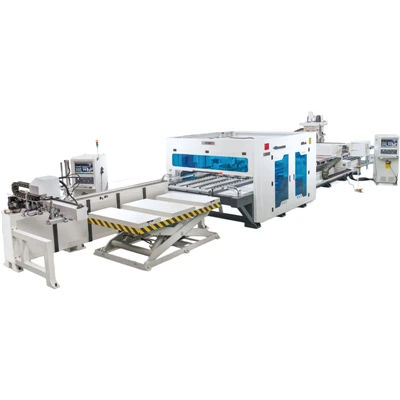
First off, let’s get the obvious (but often misinterpreted) stuff out of the way: size. A benchtop CNC router is, as the name suggests, made to sit on a workbench, a sturdy shipping crate, or even a repurposed table—no need for a dedicated floor space of its own. Most max out at around 2×4 feet of cutting area, right? I’ve got a buddy who uses a tiny 1×2 foot benchtop for making custom guitar picks on his garage workbench; it’s perfect for that. Floor-standing models? These are the beasts that need their own footprint. We’re talking 4×8 feet as a baseline, and some go way bigger—like 10×20 feet, the kind that eats full sheets of plywood or acrylic in one pass. The catch here is weight, too: a benchtop might weigh 100-200 pounds, so one person can wheel it around if they need to rearrange the shop. A floor-standing router? Closer to 1,000 pounds minimum. We once had a customer order a 6×12 floor model and had to bring in two guys and a forklift just to get it through their shop door. That’s not the kind of thing you’re moving after you set it up.
But wait—size isn’t just about moving it around. That size ties straight to two of the biggest factors people care about: power and precision. Let’s start with power. Benchtop routers almost always have smaller spindles—usually 1 to 3 horsepower, tops. Think of that like a lawnmower engine vs a tractor engine. A 1.5hp benchtop will cut soft stuff: plywood, MDF, thin acrylic, balsa wood, even light aluminum if you’re patient. But if you try to push it through 2-inch solid hardwood or ½-inch thick steel? It’ll bog down, smoke a little (not the good kind), and you’ll be stuck with a ragged cut that needs hours of sanding. Floor-standing routers? Their spindles are 3 to 15 horsepower, some even higher for heavy-duty work. That’s enough muscle to carve 3-inch thick solid walnut, mill aluminum plates for industrial parts, or even cut through foam insulation for stage sets without skipping a beat. I had a sign shop customer who switched from a benchtop to a 5hp floor model last year, and he told me he cut his production time for 4×8 foot store signs from 3 hours to 45 minutes. That’s not a trivial upgrade.
Precision is where things get a little nuanced, and it’s not just about size. Benchtop routers use smaller linear bearings and often have gantry systems made of aluminum or even MDF (wait, yeah, some cheap ones do—we don’t carry those, but I’ve seen ‘em). That works for small, light cuts, but if you’re running a repetitive job over multiple sheets, the gantry can flex just a tiny bit, enough to throw off alignment by a few thousandths of an inch over a 10-foot run. For hobbyists or custom one-off projects, that’s rarely a big deal—your guitar pick will still look like a guitar pick. But floor-standing routers have beefier components: cast iron frames, precision-ground linear rails, and drives that are way more rigid. That flex is almost non-existent. We sell a lot of floor models to aerospace parts makers, where a 0.005-inch error can mean a part gets rejected and costs them thousands. For that kind of work, a benchtop just can’t hang.
Don’t sleep on use cases, either—this is the part where most salespeople will skip over, but it’s the actual make-or-break. If you’re a hobbyist doing custom engraving on phone cases, making small wooden signs for local craft fairs, or a maker who just wants to prototype small parts for a side project? A benchtop is perfect. I’ve got a regular customer who uses our 2×4 benchtop to make custom dog tags and keychains—he runs it out of his home garage, doesn’t have a big shop, and he’d never need the space or power of a floor model. It’s affordable too; a solid benchtop from us starts around $1,500, and even the upgraded ones are under $5k. That’s a no-brainer for someone just starting out or operating on a tight budget.
But if you’re running a small production shop, a contractor who needs to cut large cabinet parts, a sign maker doing bulk orders, or anyone working with thick, dense materials? Floor-standing is the only way to go. Yeah, they’re pricier—our entry-level floor model is around $8k, and the heavy-duty ones go up to $50k+—but you’re getting a machine that can run 8 hours a day, 5 days a week, no issues. We’ve got a customer who runs a custom furniture shop with a 6×10 floor model, and they don’t have to stop mid-job because the spindle is overheating or the gantry is flexing when they do a full-sheet cut. That reliability saves them more money in a month than the difference between a benchtop and floor model costs.
Wait, there’s a common myth I need to bust here, too: a lot of people think benchtops are just “smaller, worse” versions of floor-standing. That’s not true. They’re designed for different jobs, not different quality. I’ve seen a well-built benchtop carve 1/32-inch deep engravings on acrylic that look identical to what a floor model does. I’ve also seen a cheap floor model that’s thrown together with plastic bearings make a mess of a simple plywood cut. The brand and build quality matter way more than which category it’s in, but the categories tell you what each is optimized for.
Another thing: installation and maintenance. Benchtops are plug-and-play, for the most part. You just set it on a table, plug it into a standard 110V outlet (most are, anyway), and you’re good to go with a laptop or desktop computer. No extra wiring, no need to level a 1,000-pound machine, no need for a dedicated power circuit. Floor models? They usually need a 220V or 440V outlet (some of the big ones even need three-phase power), and you have to set them up on a level floor, sometimes even bolt them down to prevent vibration during long cuts. They also need more regular maintenance—lubricating the linear rails, checking the gantry tension, replacing spindle filters—because they’re working harder more often. For a benchtop, maintenance might be wiping it down once a month and tightening a screw if it wiggles. For a floor model, it’s a 30-minute check every week.
Let’s talk about limitations, too, because being real about this matters. If you need to cut a full 4×8 foot sheet of material, a benchtop that only has a 2×4 work envelope can’t do that. You’d have to cut it in parts and glue it, which is doable but adds time and a risk of misalignment. A floor-standing model’s work area is exactly big enough for that full sheet, so you do the whole thing in one pass. Also, material thickness: if you’re working with stuff over 2 inches, the benchtop’s spindle just doesn’t have the torque to push through without breaking bits or ruining the material. I had a customer try to cut a 3-inch solid oak countertop with his benchtop last year, and he snapped three bits and ruined $200 worth of wood before he gave up and bought a floor model. That’s a costly mistake.
I also can’t ignore the growing middle ground—wait, there’s some mid-sized models called “bench-flors” or something? No, we just call them compact floor models, like a 3×6 foot one, that are a little smaller and lighter than full-size floor models but still have the power and rigidity for heavy cuts. They’re perfect for people who are growing out of their benchtop but don’t have space for a full 4×8 foot floor model. I’ve had a few small shop owners go that route when they take on bigger jobs but still need to save space in their workshop.
So here’s the thing to ask yourself before you pull the trigger: What am I actually going to use this machine for? Do I need to move it around, or is it gonna stay in one spot? Am I cutting small, thin parts or large, thick ones? Do I have a few hundred bucks to start, or a few thousand for a machine that’ll pay for itself in production time? If you answered “small parts, move it, limited budget,” benchtop is your guy. If you answered “large parts, stay put, heavy duty,” floor-standing is the call. If you’re somewhere in between, hit us up—we can point you to the right mid-sized model, no pressure.
I’ve seen way too many people make the mistake of buying the more expensive floor model when they only need a benchtop, just because they think it’s “better.” Then they end up tripping over it in their garage, not using half its features, and kicking themselves for wasting money. On the flip side, I’ve seen people buy a cheap benchtop for a production shop, and they’re always fighting with it, missing deadlines, and losing customers. The sweet spot is matching the machine to your actual workflow, not the specs on a website.
At the end of the day, both benchtop and floor-standing CNC routers do the same core job: cut, engrave, and mill your materials with computer precision. But they’re built for totally different lives. A benchtop is your sidekick for small, flexible jobs that don’t need a ton of power or space. A floor-standing router is your workhorse for heavy, big jobs that demand reliability and speed. We’ve sold both for years, and the best conversations I have are when someone tells me exactly what they need, and I point them to the right one—not the more expensive one, not the bigger one, just the one that fits their life.

If you’re still torn, or you want to chat through your specific project or space, don’t hesitate to reach out. We’re here to help you make the call that makes sense for your business, not just our sales numbers. Let’s get you set up with the CNC router that’ll actually make your work easier, not more stressful.
Automatic Edge Banding Machine References:
- CNC Router Association, "2023 Guide to CNC Router Selection for Small Businesses," Manufacturing Technology Review, Vol. 17, No. 2, pp. 45-52.
- Global Industrial Equipment Database, "Benchtop vs. Floor-Standing CNC Routers: Key Performance Metrics," 2022, Industrial Machinery Insights.
- Small Business Administration, "Equipment Selection for Craft and Manufacturing Ventures," 2021, SBA Office of Innovation.
Hangzhou Ting Ting Trading Co., Ltd.
Hangzhou Ting Ting Trading Co., Ltd. is one of the most professional CNC router manufacturers and suppliers in China. With abundant experience, we warmly welcome you to buy advanced CNC router at competitive price from our factory. If you have any enquiry about cooperation, please feel free to email us.
Address: Changshu City, Suzhou City, Jiangsu Province
E-mail: tingting12135@outlook.com
WebSite: https://www.tingtingwoodmachine.com/
