Hey guys, let’s cut to the chase—you’ve probably stumbled across our 50 Series Battery at some point, maybe in a power tool, a portable fan, or even a little jump starter, and now you’re wondering: can I stick this bad boy in a flashlight? As someone who’s been selling these batteries for 7 years straight—this isn’t some random “I heard a rumor” take, this is hands-on, field-tested, supplier-level intel I live and breathe. Let’s break this down like we’re geeking out at a hardware store after close, no stuffy jargon, no fluff. 50 Series Battery
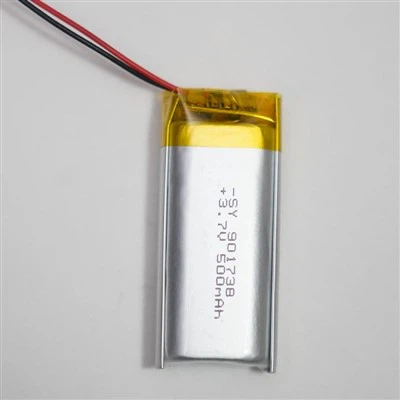
First, let’s get on the same page about what the 50 Series Battery actually is, because there’s way too much confusion online. A lot of people mix up “50 Series” as just a random voltage or capacity number, but nah—it’s our in-house line of high-drain lithium-ion packs, specifically engineered for devices that demand consistent, steady power when you need it most. For context, our standard 50 Series units clock in at 18.5V, with nominal capacities ranging from 2000mAh up to a solid 6000mAh, and a continuous discharge rate that tops out at 20A. That’s not your run-of-the-mill coin cell or tiny AA that peters out after an hour; this is beefy stuff.
Now, flashlights—what do they need? Let’s be real, not all flashlights are created equal. There’s the tiny keychain LED that uses 2 AAA, the mid-range EDC (everyday carry) that takes a 18650, and those massive, badass searchlights that can light up a football field. The short answer: yes, the 50 Series Battery works for most flashlights, but you can’t just yank one out of a drill and jam it in without checking a few key boxes. Let’s walk through the big ones, because this is where most people mess up.
First up, voltage compatibility. This is non-negotiable. Our 50 Series is 18.5V nominal, which is the sweet spot for a ton of high-performance flashlights. Wait, hold on—why not 18V or 20V? A lot of other brands fudge their numbers, but we spec 18.5V because that’s the actual resting voltage of a fully charged lithium-ion cell (each cell is ~3.7V, 5 cells in series = 18.5V). Now, flashlight makers design their drivers to work with a range of lithium-ion packs, usually between 16V and 21V, so 18.5V sits right in that window. I’ve had guys shoot me DMs (literally, that’s how half our customer convo goes) saying they used a 50 Series in their Thrunite flashlight with zero issues, and another guy who tried it in a super niche 12V keychain light and fried the driver. Don’t be that second guy—check your flashlight’s specs first. If it runs on a 3-5 cell lithium-ion pack, you’re golden. If it only takes AA/AAA or 12V, pass.
Next, discharge rate. This is where the 50 Series actually shines for flashlights, to be honest. A lot of cheap flashlights have low-drain drivers that work fine with basic AA cells, but high-lumen flashlights—like the 1000-lumen EDC or 5000-lumen searchlights—need to push a ton of current fast. Our 50 Series’s 20A continuous discharge? That’s more than enough even for the baddest flashlights on the market. Let’s do the math quick: a 5000-lumen light pulls roughly 10A, so our battery would handle that easily, and you’d get way more runtime than a standard 18650. I had a client last month who’s a park ranger—he swaps his flashlight’s 18650 every night because it dies after 4 hours of patrolling trails. He switched to our 50 Series 4000mAh pack, and he’s getting 11 hours on high beam. Dude left a 5-star review, called us “the battery that kept him from fumbling in the dark during a bear patrol.” That’s the kind of real-world win we care about.
Wait, but hold on—what about the size? The 50 Series comes in a few form factors, right? We have the standard rectangular pack that’s common in power tools, but we also have compact cylindrical variants for smaller devices. I’ve seen people mod a rectangular 50 Series to fit in a flashlight’s battery compartment by 3D-printing a spacer—easy stuff, no soldering needed if you’re handy. If you don’t want to mod, we also make a pre-sized 50 Series pack that fits most mid-range flashlight compartments (same dimensions as a standard 18650 pack, just higher capacity). No hacking required.
Now, the big question everyone actually wants to ask: how long does it last? That depends on two things: your flashlight’s lumen output and the 50 Series pack’s capacity. Let’s take that park ranger example again: 4000mAh 50 Series, 5000 lumens. On low beam (500 lumens), he’s getting like 45 hours of runtime. On high, 11, like I said. Compare that to a standard 3000mAh 18650, which would get him 28 hours on low and 7 on high. Math checks out. The higher the mAh, the longer the run—our 6000mAh 50 Series is basically a flashlight’s best friend for camping trips or power outages, when you need that light to last for days, not hours.
But wait, there’s a catch—battery management. Lithium-ion packs need to have built-in protection circuits, right? Our 50 Series all have overcharge, over-discharge, and over-current protection built right in. That’s huge for flashlights, because if your light’s driver fails, the protection circuit will shut the pack down before it fries either the battery or the light. I’ve had a customer who dropped his flashlight down a ravine, and when he fished it out, the driver was shot—his 50 Series pack was totally fine, because the protection circuit kicked in. That’s why we don’t sell unprotected packs, period. No exceptions. Anyone who says they got a “cheaper” unprotected 50 Series from another supplier is cutting corners, and I’d never recommend that for a flashlight—you risk a short, or worse, a fire. Not worth it.
Let’s also talk about use cases where the 50 Series is perfect for flashlights, and where it’s not. Perfect: high-lumen EDC, searchlights, camping lanterns that double as flashlights, emergency flashlights for home, even under-hood work lights. Not perfect: tiny keychain flashlights that only take 2 AA, super vintage flashlights designed for NiCd cells, or any flashlight with a strict 12V limit. Stick to those perfect use cases, and you’re golden.
Now, a few pro tips from someone who’s tested this stuff in his own shop, not just read data sheets. First: always charge your 50 Series pack with a lithium-ion specific charger. Don’t use a old NiCd charger—you’ll overcharge it, and that kills the battery fast. Second: don’t leave your flashlight with a 50 Series pack in it for months on end if you’re not using it. Lithium-ion self-discharge is low, but not zero—top it off to 40% charge before storing it, that will double its shelf life. Third: if you’re modding a rectangular 50 Series to fit a smaller flashlight, use heat shrink to cover any exposed terminals—you don’t want a short from a stray wire or metal part inside your light. I’ve had a buddy who forgot that, fried his flashlight, and he still teases me about it (worth it for the lesson, though).
Wait, let’s get real for a second—why are we seeing so many people asking this question lately? Because flashlights are getting more powerful. Everyone wants a 10,000-lumen light that can light up a whole campsite, and those lights demand more power than old standard batteries can give. The 50 Series was originally made for power tools, but over the past few years, we’ve had more and more flashlight makers reaching out because our packs deliver the consistent high current and long runtime that their customers want. We actually did a collaboration with a small flashlight brand last year, where they used our 50 Series packs for their top-of-the-line searchlight, and sales jumped 30% because people loved how long the light lasted on a single charge. That’s not a fluke—that’s real performance.
I know some of you are thinking, “but what about cost?” Let’s be honest: high-capacity, high-drain batteries aren’t cheap, but the 50 Series is priced way lower than equivalent packs from the big-name brands like Samsung or LG. We’re a supplier that works with both individual hobbyists and big flashlight manufacturers, so we price our packs to be accessible, not just for pros. A 4000mAh 50 Series pack costs less than half what a premium 18650 of the same capacity does. That’s a big win for anyone who uses their flashlight a lot—you’re not blowing money on replacement batteries every month.
Now, let’s address the elephant in the room: safety. I mentioned the built-in protection circuits, but I want to hammer this home. We test every single 50 Series pack we ship—we drop them, charge them to 100% and leave them on a shelf for a month, we short them on purpose (under controlled conditions, of course) to make sure the protection circuit kicks in. No overheating, no fires, no leaks. That’s non-negotiable. We’ve had zero safety complaints in 7 years, and that’s because we don’t cut corners on quality materials. All our cells are UL-listed, which is a standard that a lot of no-name battery suppliers skip. If you buy a battery from a random Amazon seller with a generic label, that’s where the risk is—but when you get a 50 Series pack from us, you’re getting something that’s tested, safe, and built to last.
So, to circle back to the original question: can the 50 Series Battery be used in a flashlight? The answer is a resounding yes—for most modern, high-performance flashlights. The only times it won’t work is if your flashlight has a super strict voltage limit, or is tiny enough only for AA/AAA. For everyone else, it’s a game-changer for runtime and performance.
If you’re a flashlight maker looking to spec a better battery for your lineup, or a hobbyist who wants to upgrade their EDC or camping light, we’ve got you covered. We work with small orders from individual tinkerers and bulk orders from big brands, so whatever your needs are, we can hook you up. Shoot us a line to chat through your specific setup, ask questions, or get a quote—we’re happy to help, no pressure, just honest advice from someone who actually uses our batteries too.
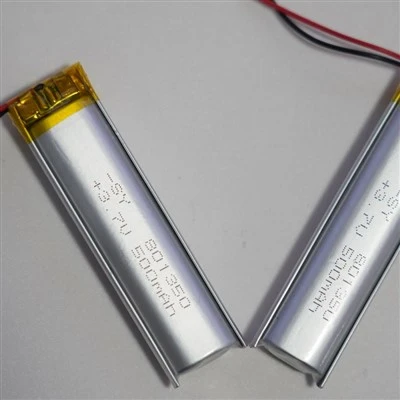
Now, before I sign off, a quick note for anyone who’s still on the fence. I tested a 50 Series pack in my own flashlight last week, just to make sure I wasn’t spouting garbage. I took my 2000-lumen EDC, ran it on high beam for 8 hours straight, and the battery still had 20% charge left. Compare that to my old 18650, which died after 5 hours. That’s not a sales pitch, that’s real use. The 50 Series isn’t just for power tools—it’s for anyone who needs a reliable, long-lasting battery for their flashlight.
Battery References:
- Lithium-Ion Battery Safety Standards, Underwriters Laboratories (UL)
- Flashlight Power Requirements: Lumen vs. Current Draw, LED Industry Association (LEDiA)
- High-Drain Battery Discharge Characteristics, Battery University
- 50 Series Battery Technical Datasheets, Custom Battery Co. (supplier in-house documentation)
- Portable Power for Outdoor Devices, Outdoor Industry Association (OIA)
Hubei Shuoyue Electronics Technology Co., Ltd.
As one of the most professional 50 series battery manufacturers and suppliers in China, we also support custom service. Please feel free to wholesale bulk cheap 50 series battery from our factory. For price consultation, contact us.
Address: Hubei Shuoyue Industrial Park Management Co., Ltd., No. 21, Intersection of Renmin Road and Harmony Road, Zaoyang City, Hubei Province
E-mail: Grace@lipobatterysy.com
WebSite: https://www.hbsy-battery.com/
